A new year begins and, following the seasonal excesses, there’s one less Waitrose Essentials turkey roaming the plains of Norfolk. As usual, after all the time and effort I put into roasting the thing it didn’t seem to taste of anything very much so, I guess, once again the bird had the last laugh – or chuckle, cluck, gobble or whatever it is that metaphorical fowl do to signal their one-upmanship, or one-upbirdship or…let’s just forget it and move on.
It’s Saturday so I have a quick scan through the Guardian and Alexei Sayle’s review of Dave Aaronovitch’s memoir makes me smile. I especially like the bit about the Marxist dentist who, either through incompetence or maybe ideological reasons, didn’t bother with local anaesthetics, and so traumatised a generation of would-be party members. Surely there must be potential for a Netflix mini-series in there.
Enough of all that tittle tattle, what about ranting and rambling round the fringes of the artworld? Ok, we’re getting there. I haven’t written on of these bloggy things for a couple of weeks while I was enduring the festivities so I’m a bit out of practice. So let’s take another run up and start again…
It’s ten years since I last saw Annie, so when we meet up at Victoria we spend the first couple of hours in the Pret just outside the station discussing world events and catching up on news about mutual friends. I also introduce her to the chocolate mousse which, she has to agree, is a thing of wonder. She’s only got a few hours before getting the coach to Paris so what shall we do? I sing a couple of bars of the opening routine to On the Town but with neither the voice of Sinatra nor the feet of Gene Kelly, let alone the pretty sailor suit, it falls a little flat.
In the end we decide on a visit to the Leighton House Museum. Annie’s just bought a house that needs a bit of work doing to it and I manage to convince her that this is the place to go if she wants to get some ideas on how to smarten the place up. Leighton was lauded by both the Victorian art establishment and the general public, gaining critical, popular and financial success before rising to become President of the Royal Academy – and he’s still the only professional artist ever to be ennobled and enter the House of Lords – so he probably knew a thing or two about interior decoration. Anyway, we get the tube to Earls Court and then it’s a fifteen minute walk through the drizzle, with me pointing out various haunts from the time that I spent as an honorary Ozzie working for TNT Magazine. The Prince of Teck, the Hansom Cab and the Princess Alice are all still extant and all looking noticably smarter than when they were full of us hacks and sales reps downing VBs and tequila slammers back in the 1980s.
Finally Annie and I get to the House and its unornamented, very square, red brick exterior suggest the absolute embodiment of a solid, secure, respectable Victorian home. But step inside and once you’ve passed the ticket desk* be prepared for a shock as everything turns blue and dazzling, from the stuffed peacock standing on the staircase to the great tiled walls and all the ornamental pots and plates. The Arab Hall is plastered with some of the booty that Leighton brought back from his visits to the Middle East and while the true connoisseur might query the way he’s fitted together the textiles, ceramics and woodwork from different chronological periods and geographical settings, for the rest of us it all just looks very impressive – just as it’s meant to. And despite all the surface flashiness of the decoration the room still, somewhat curiously, manages to project an atmosphere of peace and calm, and one can just about imagine the dashingly attractive Lord padding around in his silk dressing gown and Moroccan slippers, asking his butler to run a bath or fetch a double brandy. A small water fountain tinkles away in the background which, doubtless for some, adds to the contemplative ambience of the scene but for others – well, suffice to say, the attendant was primed to point me in the direction of the toilet before I even had to ask him.
The good lord wasn’t just interested in the antique and the exotic, however, and if you’re not a Leighton Orient fan then the other ground floor rooms contain examples of some of his more contemporary, European acquisitions. There’s a small suite of Corot panels that are much more colourful and attractive than his usually gloomy dark green landscapes; a small Delacroix sketch located in the ceiling although, being beyond my focal range, I’m not sure what it represents; and a surprisingly weak Millais portrait of a young boy.
Annie is convinced that I’m a bit of an art buff so she asks me what style Leighton himself painted in and my mind goes blank. While I can recognize one of his works at forty paces – you know the kind of thing, those scenes of slave girls in skimpy togas or nymphs frolicking under a waterfall – I can’t think of the correct art historical term that encapsulated this particular type of entertainment. I mumble something about technically highly accomplished, rather camp, Victorian soft porn with a Neo-Classical twist. Then, out the corner of my eye I see one of the laminated crib sheets that are strategically placed around the rooms and spot the phrase Aesthetic Movement and that sounds about right, so I add that in. I also repeat the famous mantra about art for art’s sake – and that here’s no meaning, message or moral point in Leighton’s art it’s just there to be enjoyed for the sheer visceral thrill and visual titillation. At which point I look around for some examples of the maestro’s own work to illustrate my comments but – and this is, of course, the very unfortunate, very big but – instead of there being a well-selected collection of his finest works, there are just some fairly minor examples. The two most important of his paintings here are fascinating bookends – The Death of Brunelleschi, painted when he was only 22, shows the technical mastery for which he became famous (just look at that foreshortened whippet, it’s a triumph), and Clytie (a heartbroken nymph) his final work, looks truly forlorn, left as it is in its unfinished state. Though both fascinating, neither is exactly representative of his typical style. I think Tate Britain may have some of his paintings on display but if you want to see some really impressive works of his then it’s definitely worth heading over to the Victoria & Albert Museum and tracking down his giant frescoes that they have on permanent display.
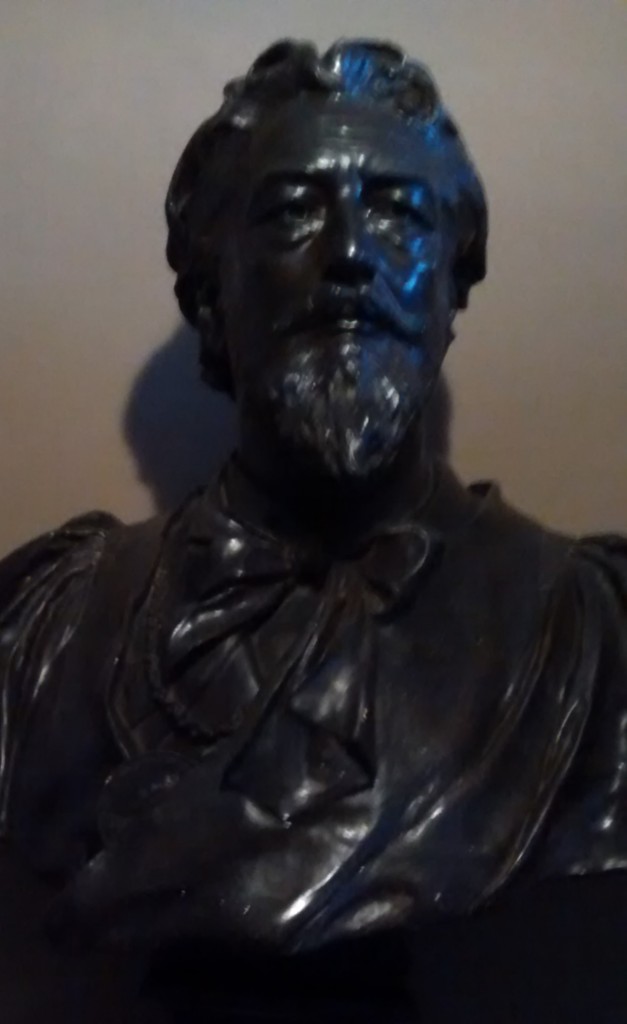
So, what else is on show in the House? Well, amongst all the flock wall paper, more ceramics and more decorated carpets there are other souvenirs of his travels – copies of bits of the Parthenon and God Giving Life to Adam, from the opening credits of the South Bank Show, and also some of his homoerotic bronze sculptures, including the Sluggard and the Athlete Wrestling a Python.
There’s a lot of interesting stuff here to catch the eye, whether wandering through the highly ornamented Arab hall, up the decorative staircase, round the vast, light-filled studio or having a peak into his spartan bedroom. If this were an early Victorian episode of Through the Keyhole then it would be pretty easy to guess the celebrity name, although, other than the fact he had rather exquisite taste, I’m not sure the place reveals very much more about the man himself. Of course, maybe there are no hidden depths to discover about Leighton and that, like his art, he was all surface, the perfect personification of the Aestheticism that he promulgated.
After buying our obligatory postcards, Annie and I go back out into the rain and walk along High Street Kensington looking for a burger bar. Well, I don’t suppose that she’s going to be able to get any good nutritious fast food like that in Paris. I suggest the McDonalds opposite the tube station – apparently it’s the one where Lady Di took the Princes when they were young – but Anne demurs. So we walk on and find an American Diner type place opposite Kensington Park. The burgers are ok and the Budweiser slides down very aesthetically.
*If you’ve got an Art Fund card then it’s free to get in. Otherwise, if you’re a senior then it’s £5, which seems reasonable enough.