To Green Park tube station and stop off at Pret a Manger for a refreshingly fizzy elderberry and grape juice drink before exiting out into the drizzling rain and taking a brisk walk along Piccadilly to get to the welcoming shelter of the Royal Academy. Having bitten the bullet and paid the annual members fee of £97 it means that I no longer have to queue in the foyer to buy tickets and, more usefully, I can return to take second and third looks at any shows that warrant repeat viewings without incurring extra costs. Consequently, I dry out while paying my respects to Rothko, de Kooning, Pollock and the rest of the boys whose enormous, colourful confections fill the walls for the major Abstract Expressionism review show that’s still running in the main exhibition space here, and that I blogged about a few weeks ago. After that, it’s up the back staircase to get to the smaller Sackler Gallery for the Academy’s other main display, which is rather inelegantly entitled Intrigue: James Ensor by Luc Tuymans.

Now, it seems to me that traditional rules of grammatical construction suggest that the insertion of the word ‘by’ between the two artist appellations implies that the latter is, in some way, the creator of the former which, frankly, seems a bit unlikely considering the fact that Ensor had departed this world before Tuymans had even entered it. But then, apparently, among the most difficult of the many idiosyncrasies of the English language, set to befuddle the eager young student attempting to master the intricacies of our native tongue, is the problem of how to determine the correct assignation of those tricky little words, the prepositions. All of which makes it somewhat puzzling that, having decided to ask the artist Tuymans to select and curate an exhibition of works by his fellow Belgian Ensor, there was no-one available from among the Academy’s many talented administrative staff to suggest a less awkward sounding formulation for the project’s overall title. Had that intervention occurred, then I suppose someone might also have advised that it could seem just a tad self-serving and bumptious to require that oneself, as impresario, should receive a billing equal to that of the actual creative star of the show.
It’s not even as if Tuymans has made an unusually radical selection from among Ensor’s works, or managed to display them in some new, revolutionary way in order to reveal a strikingly innovative interpretation of the artist’s oeuvre. Far from it. As far as I can tell, everything appears as one would hope and expect from a normal, standard, roughly chronological presentation. Ok, at the start of the show there is one silly, faked-up piece of silent film by some conceptualist that purports to show Ensor in a home movie setting, walking on the beach with friends and family. But aside from that, it’s straight into a display of some of Ensor’s early academic paintings of interiors that are impressive in their sense of gloomy realism. And then come the more familiar – tonally lighter but psychologically much darker – pictures that came to characterise Ensor’s particular brand of rather peculiar urban Symbolism. Elsewhere in the show is a large selection of cartoons and caricature sketches that confirm the artist to be a draughtsman of great technical accomplishment as well as having not so much a GSOH as a rather brutal and caustic one.
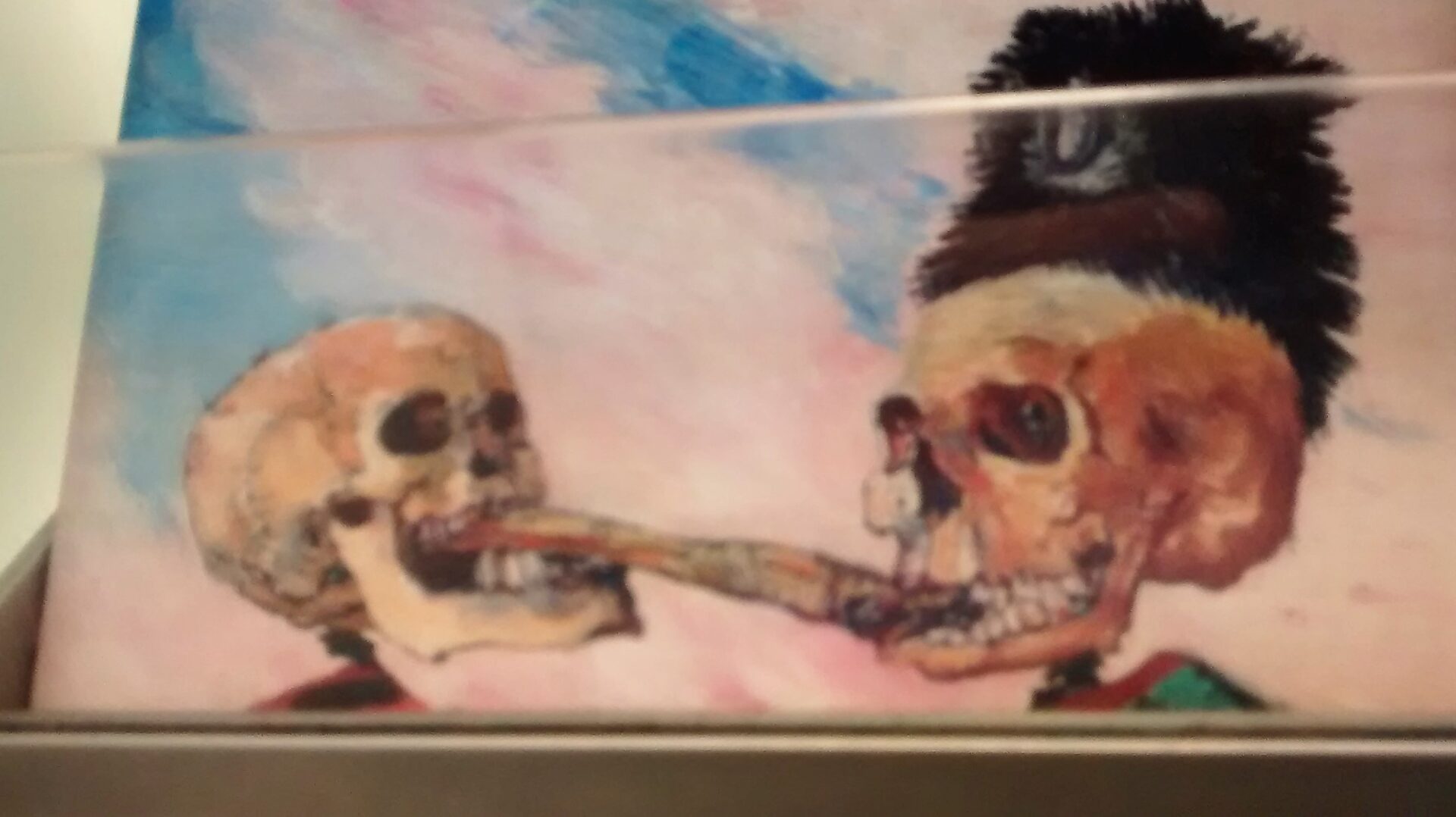
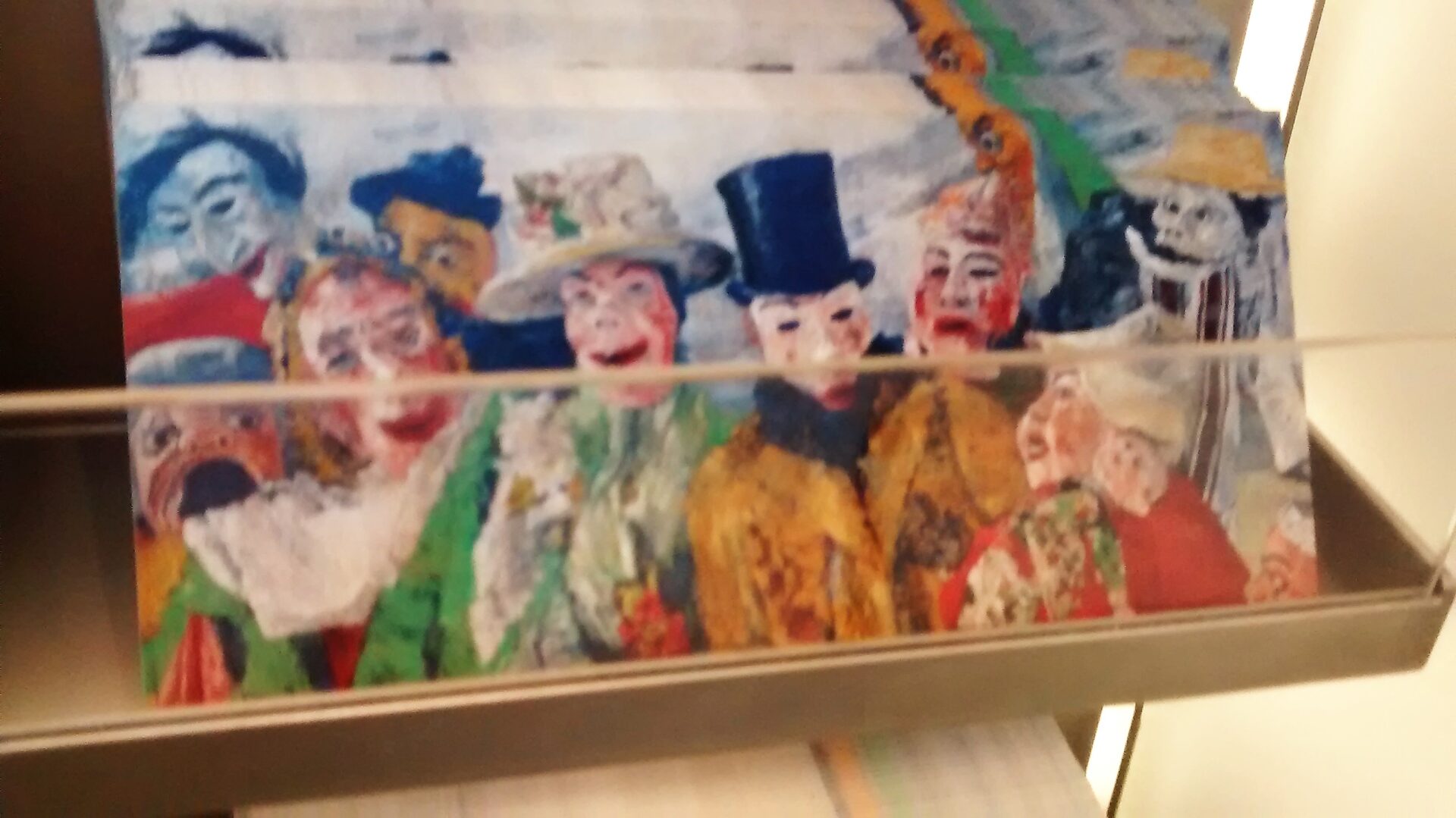
As expected by anyone who’s seen examples of Ensor’s work before, there are appearances from the usual cast of skeletons and masked figures going about their daily business as guileless and unassuming as those voluptuous nudes that populate the Surrealist cityscapes of that other Belgian iconoclast, Paul Delvaux. And such are the oddities of Ensor’s decorative compositions that it’s tempting to propose him as something of a Proto-Surrealist. He certainly managed to create some of the strangest masterworks in Modern Art including the eponynous Intrigue, with its bizarre assembly of fairground grotesques as discomforting as any of today’s horror film clown imitators; and the appropriately named Two Skeletons Fighting over a Pickled Herring, in which the preserved piscine predator has become an object of desire fought over like the rope in a tug-of-war between the opposing incisors of two mutually antagonistic skulls. And that’s not to mention his crucifixion scene where the lord is decked out in a short pink tutu, or the still life centered on a squid that’s propped up against a shelf, languidly directing his beady eyes straight back at anyone who has the audacity to stare at his uncomfortable situation.
Ensor comes across as an intriguingly strange man capable of creating powerfully arresting, but very odd, images and it’s completely unsurprising that initially his works confused and disturbed some of the more conventionally-minded of his contemporary critics. Perhaps most odd of all, however, was that towards the end of his life, this most uncompromising artist was apparently warmly embraced within the bosom of Belgium’s highest establishment circles – a situation that culminated when King Albert bestowed the titular honour of a baronetcy upon a grateful recipient. Which kind of makes me wonder whether a world that can produce a President Trump could also one day see the ennoblement of another artist with a predeliction for pickled fish with a future King Charles III anointing a genuflecting Lord Hirst of Newport Street.
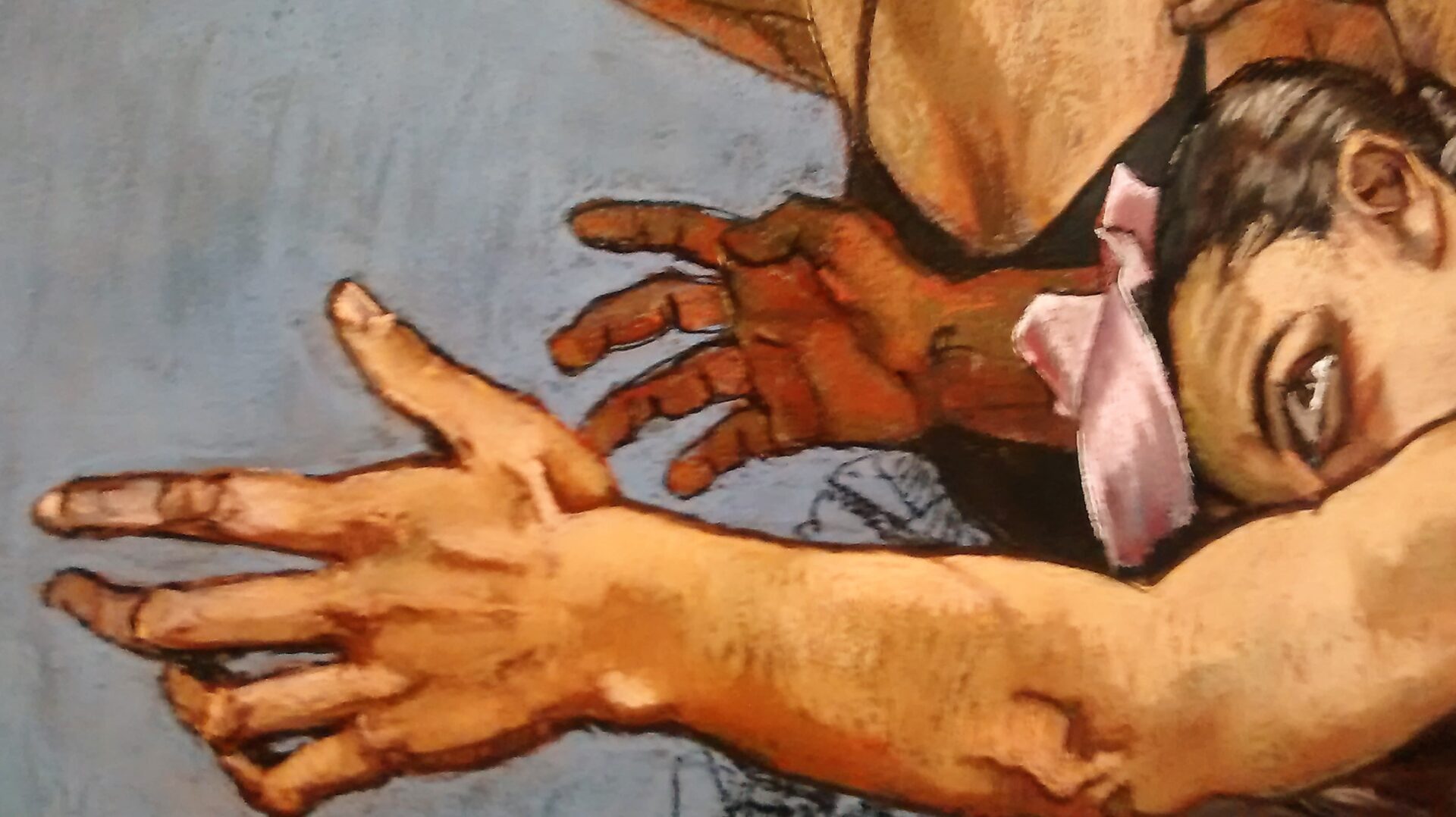
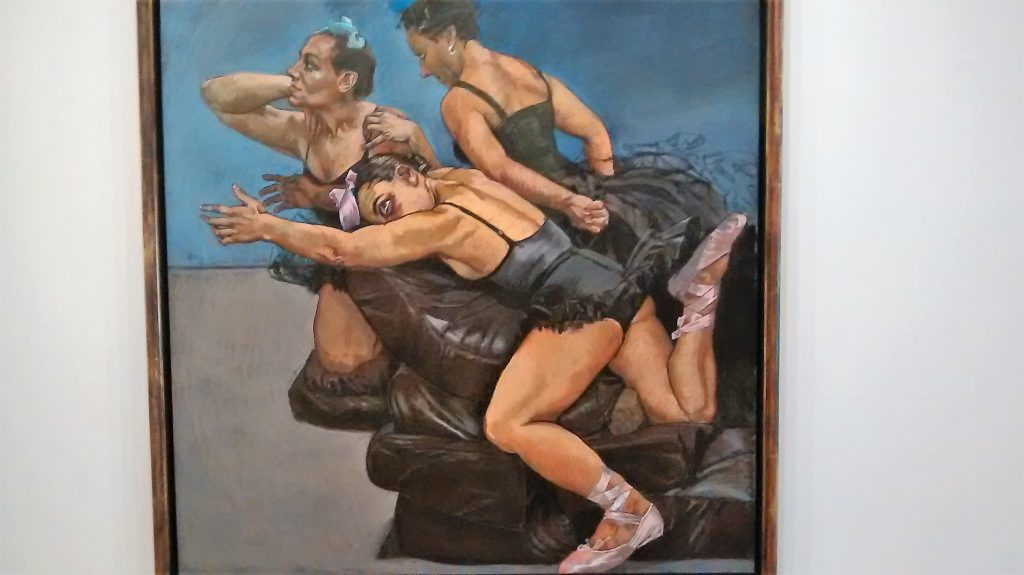
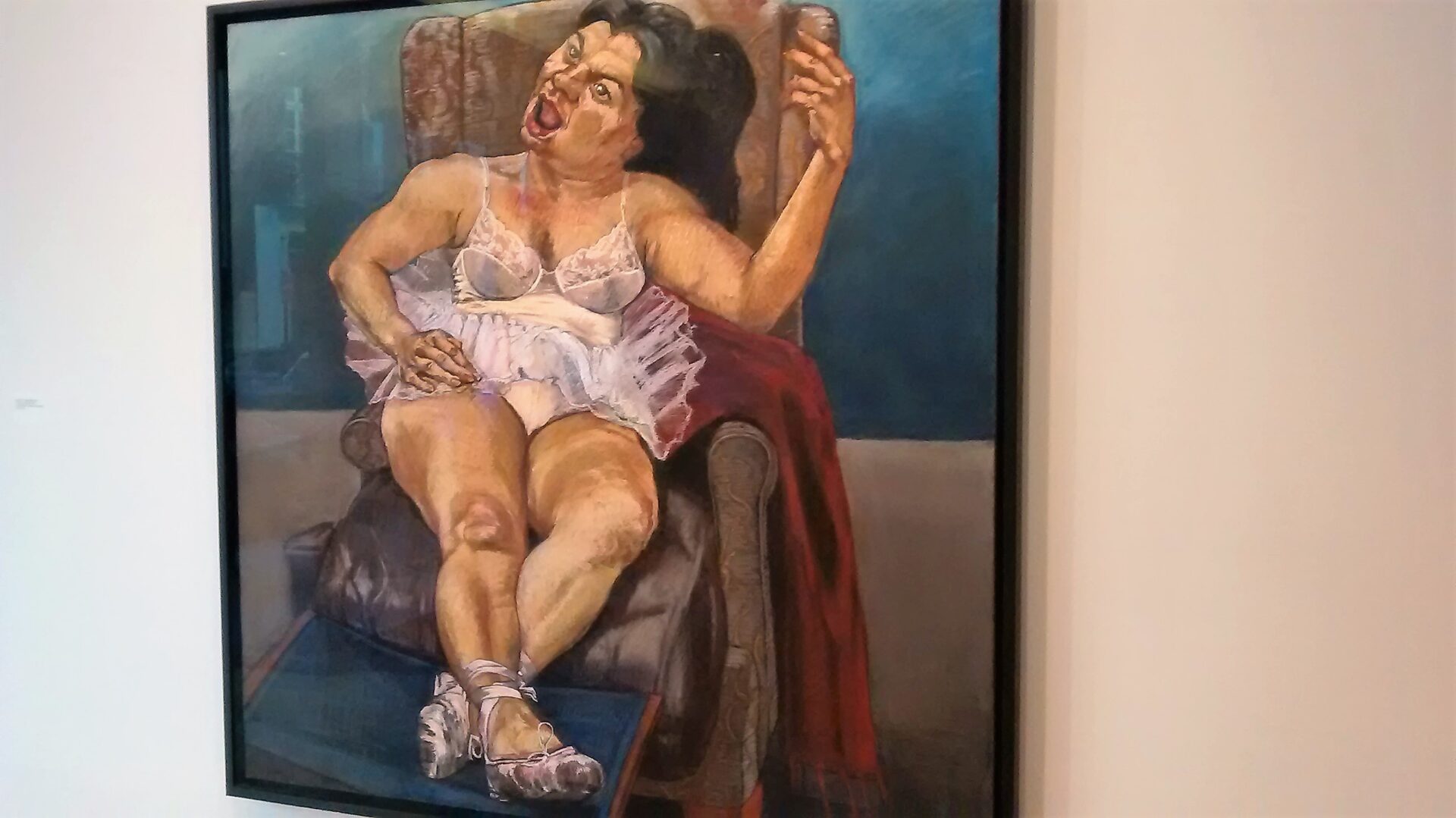
Perhaps a rather more closer heir to Ensor is the Portuguese-British artist Paula Rego, some of whose large, coloured pastel drawings are currently on display just round the corner from the Royal Academy at Marlborough Fine Art. Every bit as technically skillful as the great Belgian artist, Rego also shares his mischievous taste for producing scenes designed to ever so slightly discomfort her audience, whether it’s sadistic little girls bullying their father, a farmer’s wife all too eagerly approaching a trio of sight-impaired rodents or today’s suite of sketches showing a group of portly ballerinas struggling to retain their dignity while attempting a choreography that is perhaps beyond their natural ability. Apparently, Rego was inspired to produce this current sequence of drawings after watching one of the scenes from Walt Disney’s Fantasia, which similarly involves an awkward group of ostriches having difficulty with a dance routine. By metamorphosing the birds into people, Rego has managed to create a curiously moving if slightly comic narrative which, as the artist herself has noted, alludes to the inevitable deterioration of the human body with age and the accompanying absurdities and indignities to which we can all look forward. The whole show is a succession of really very works and, as far as I’m concerned, Rego is simply this country’s greatest figurative artist.
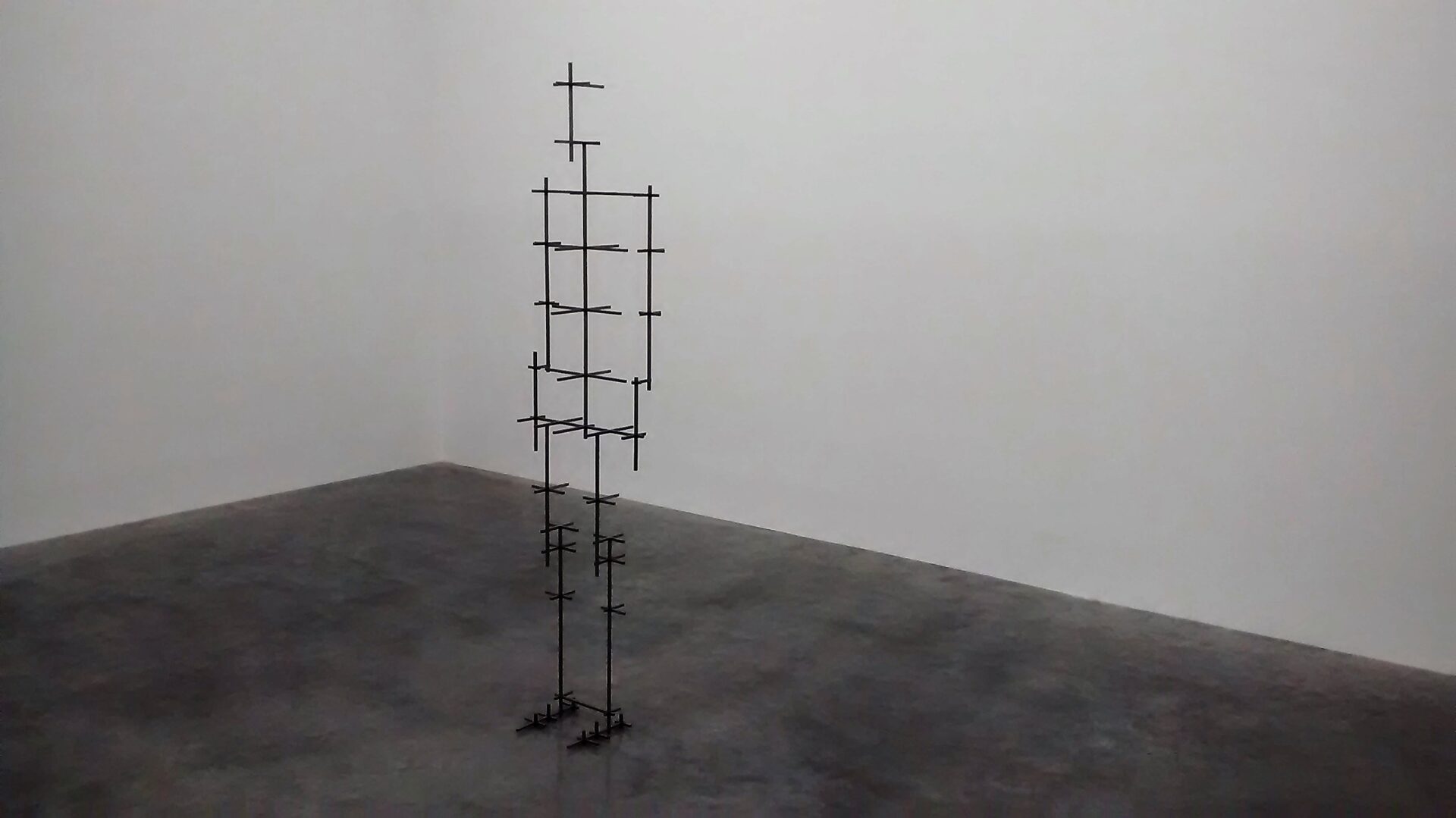
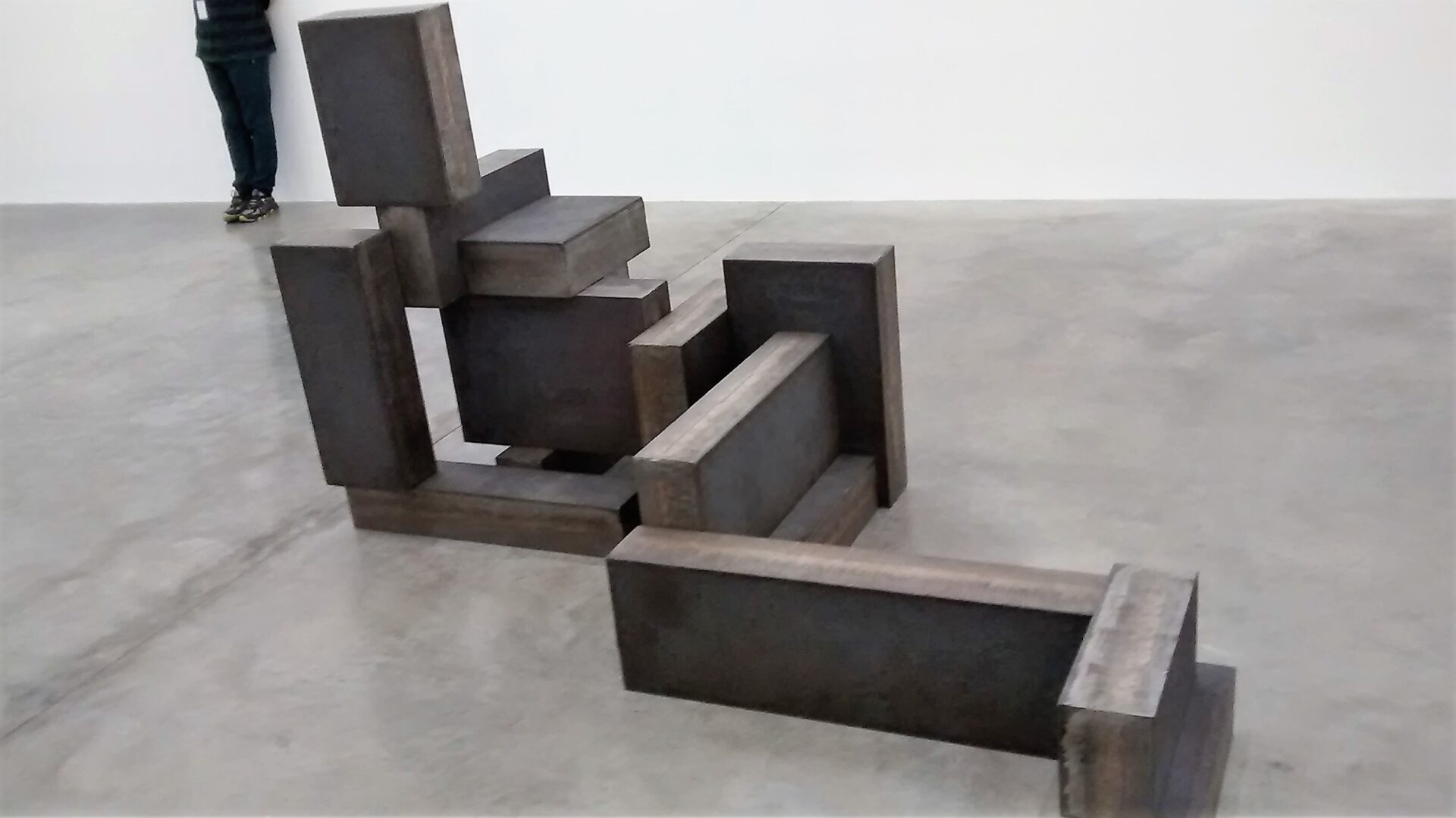
Leaving the gallery the rain starts to fall more freely and I’m in two minds whether to make the trek over to Bermondsey to see the exhibition of Anthony Gormley’s works at the White Cube gallery. The show only has a day or two to run so I feel that I ought to try to make the effort and I have to say that I’m so glad that I did. Not normally being one for diving into hyperbolic statements, especially when it comes to praising someone’s accomplishments, nevertheless, I think I can reasonably enough do it again in this blog by saying that the show confirms, for me at least, that Gormley deserves to be considered as the country’s greatest living sculptor. As with most of the artist’s work, the exhibition is a simple series of sculptural riffs and meditations on the structure of the human form – a subject one might think had been fairly comprehensively and conclusively covered after a couple of millennia of Western artistic endeavor. And yet, here is Gormley with almost Picasso-like inventiveness dashing out, one after the other, a whole range of clever new constructions in a range of sizes and materials – from simple metal pins to massive concrete blocks – that convincingly reconfigure the human frame. All-in-all, a pretty good day’s gallery going, despite the inclemency of the weather.
The full price combo ticket to see both the current Royal Academy shows is £25 or £23 if you can prove that you’re old enough, which is probably just about worth it.
And there’s a small display of some of Tuymans’ typically anaemic portraits currently on show at the National Portrait Gallery.
Re Paula Rego
“The whole show is a succession of really very …………. works and,”
The missing link ??
I really must know…….
Ineffable.
Like “There’s Only One F In Fulham”….