
Following on from last week’s Liverpool blog, I’ve now travelled the thirty-odd miles in an easterly direction to arrive at one of the other great potential powerhouse cities of the North. Although the fact that the train journey took me almost an hour to get to Manchester is perhaps an indication of just how much infrastructural development needs to take place before there’s much chance of releasing the pent up synergistical energies promised by the geographical proximity of these two lumbering urban giants. As for how well they’re both currently progressing along the putative path from a post-industrial past to an aspirant super-cyber-technical future is all a bit hard to tell since impressions gained during whistle stop visits like mine are bound to be generalised, subjective and fairly superficial.

Nevertheless, as far as I can tell, surface indicators suggest that both places are succeeding in projecting a fairly healthy optimistic buzz with bustling arcades full of energetic shoppers, coffee shops crowded with competitive cake-eating commuters and a multiplicity of pubs and restaurants packed with talkative topers and gregarious guzzling gourmands. There also seems to be quite a lot of building work going on in both housing and commercial sectors although off-setting all these positively positive signs of economic energy is the hugely depressing scourge of mendicancy that seems to be scarring so many city centres today that it’s very sadly starting to achieve a grim level of normalcy and social acceptance. And while this blight is, of course, also present in parts of London and the South, it does seem to be particularly prevalent up here.

But leaving aside these matters of deeper sociological consequence, what about the relevant cultural performance indicators, the analysis of which fall more closely and comfortably within the remit of this particular piece of bloggospheric rambling? Well, both Liverpool and Manchester have their city centre galleries constructed in previously prosperous Victorian times and fulfilling the functions of being edifices for the edification of their burgeoning populations as well as tangible projections of civic dignity and pride. And while neither can match the much larger collections held in the great public galleries and institutions of London, the more recent Modernist and Post-Modernist temples – Tate, Bluecoat and FACT in Liverpool matched by Whitworth and Home in Manchester – are arguably just as good or even sometimes better than their equivalents amongst the capital’s second tier grant-funded galleries (like Camden Arts Centre and the Whitechapel).
Oh well, if not completely odious, comparisons like these tend to be all a bit pointless and meaningless although there is one notable area that really does separate London from everywhere else in the country, when it comes to matters artistical. For while there are literally hundreds of commercial galleries dealing in Modern Art all within walking distance of the capital’s underground stations – as this blog so tirelessly demonstrates each week – I’m not sure that there’s even a single one in the whole of Liverpool or Manchester or in any of the hinterland that connects them.

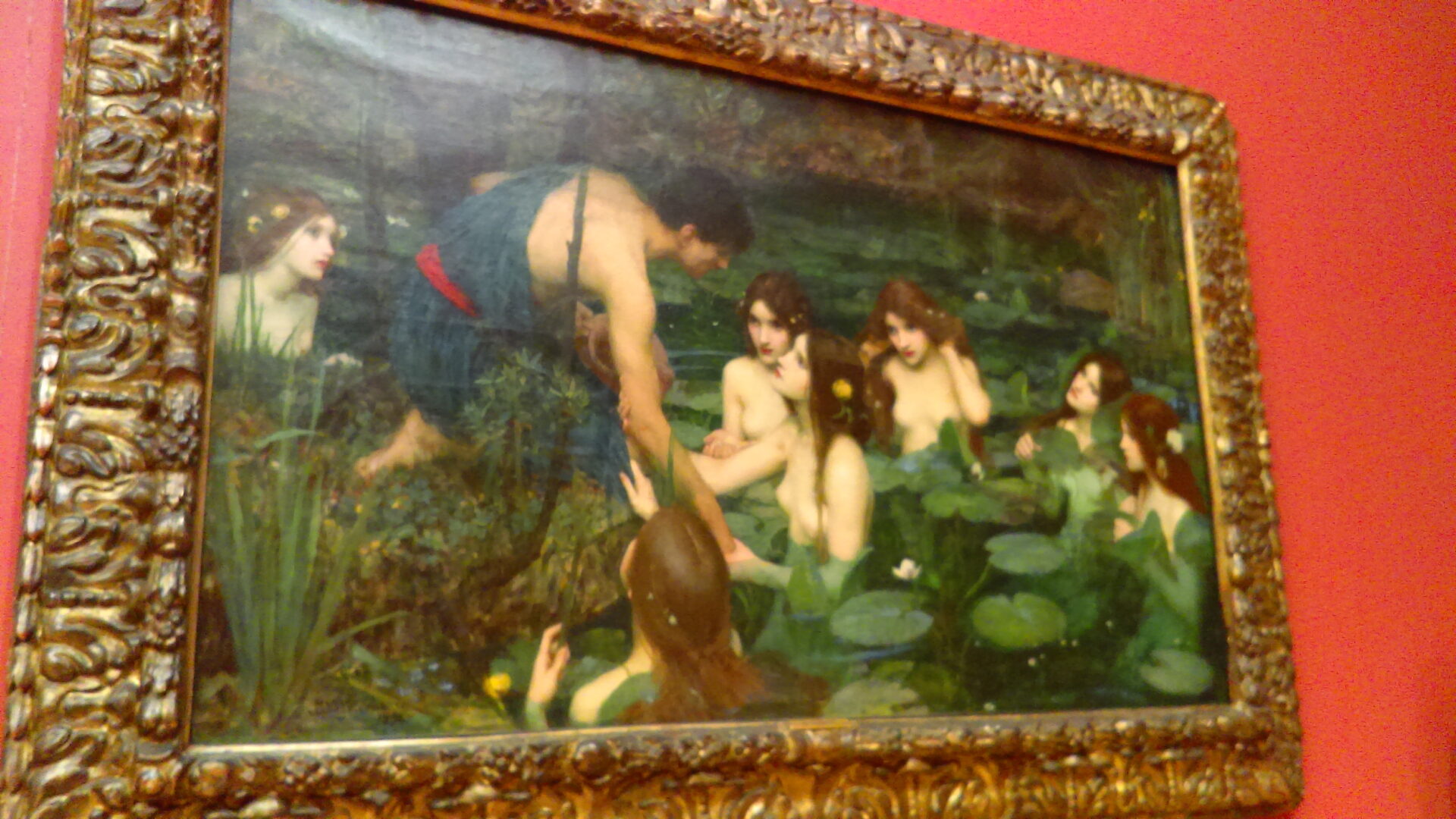
Anyway, rather than pontificating further about the causes and consequences of what doesn’t exist and why it doesn’t exist, now feels like the appropriate time to make a return visit to the Manchester City Gallery. And here, I’m pleased to be able to report that the main permanent collection remains pretty much unchanged from the last couple of times that I’ve visited and blogged about it. And good for that. Bucking the current curatorial trend for continually rehanging things and switching them about – replacing old favourites with obscure minor works that, for good reason, are usually kept out of sight in storage – the displays here are full of happy treats that seem to have remained in situ for at least the past few years. Maybe I’m getting soppy and sentimental in my old age but, frankly, in our frenetically fast-changing world I find it all rather comforting to turn a corner here and be reacquainted with old friends like Landseer’s slumbering lion and Stubbs’ fearsome cheetah; Etty’s ludicrous Siren and Ulysses; Magner’s riproaring Chariot Race; Millais’ Autumn Leaves; Waterhouse’s saucy Hylas and the Nymphs; and a great triplet from Holman Hunt – The Scapegoat, The Shadow of Death and The Hireling Shepherd (some of which are pictured above).

Elsewhere in the gallery, among the temporary displays is a comprehensive retrospective of paintings by Annie Swynnerton, an artist who apparently was very highly regarded by her professional peers and recognised internationally during her lifetime, but whose subsequent reputation has diminished to the point of her current obscurity. At least, I’ve never heard of her, nor am I familiar with any of the works now being shown in this attempted revisionistic revisitation. So, does her work and career warrant this critical reassessment and deserve a reputational reassertion? Well, I think it’s fair to say that she was definitely an accomplished draftswoman and colourist with a style that evolved from a traditional Victorian figuration through a sort of Pre-Raphaelitism on to a looser form of Impressionism with interludes of Symbolism and a Whistlerian Aestheticism.
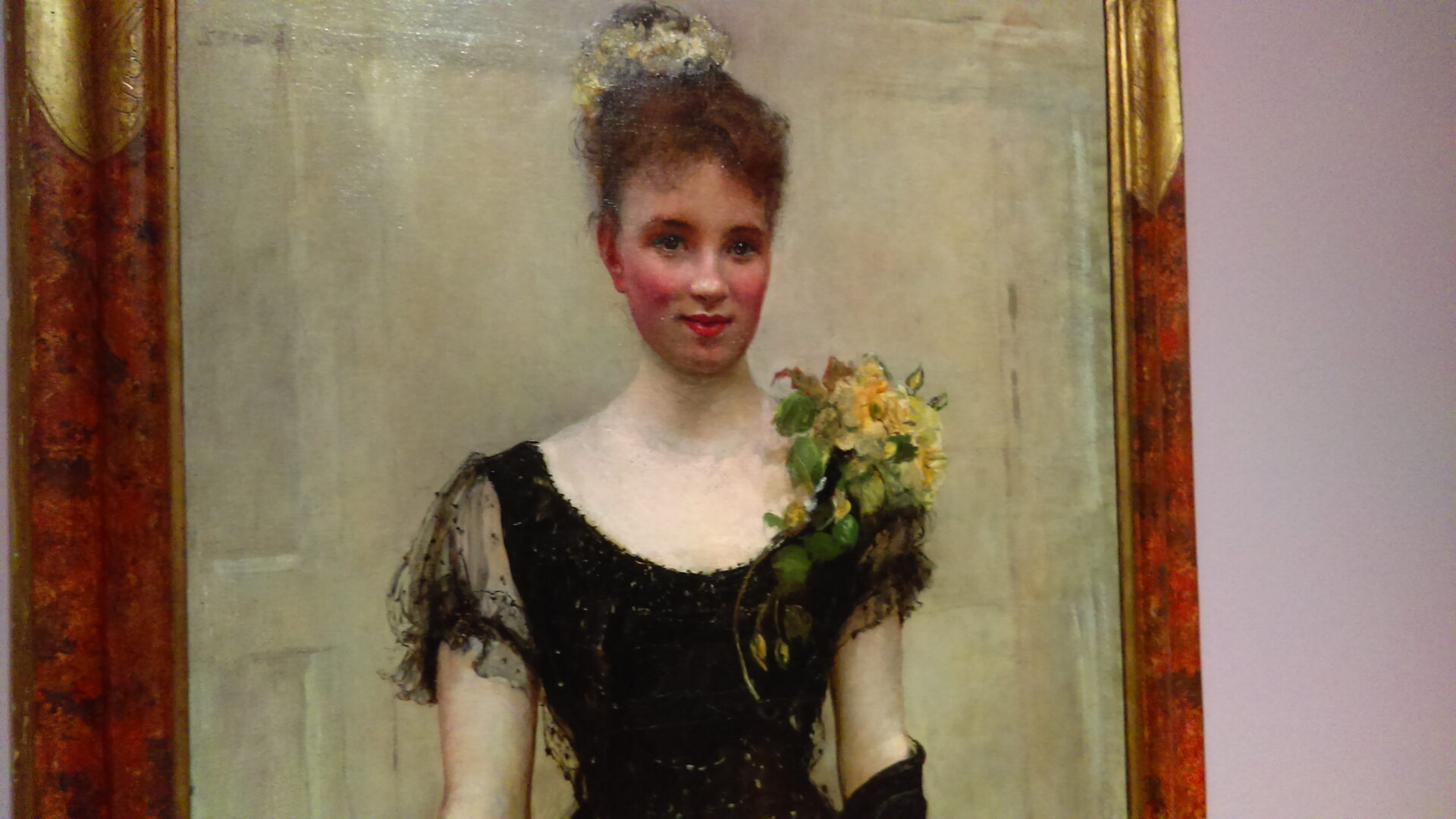
In short, she seems to have been happy to test out various different techniques rather than ploughing a more consistent furrow, though whether this stylistic flip-floppery ultimately contributed more to her posthumous reputational decline than the institutional sexism of the artworld or the post-War curatorial fashion that turned away from her kind of comfy traditional realism, is hard to tell. In any case, it’s an interesting exhibition that very reasonably elevates Swynnerton at least to footnote status on the pages of the Modernistic record though I think it’s probably unlikely that she’s ever going to rise far beyond that.

Over in the new annex to the original old Gallery the curation remains as confused, haphazard and unhappy as I recall from previous visits. The Art in the Netherlands display contains a lot of interesting and attractive historical paintings but is stuffed into such a cramped space and hung so awkwardly that it’s unwelcoming ambience acts as a definite deterrence to the casual viewer. At least it does to me as I find myself nudged quickly through it and on to a special small selection of paintings by LS Lowry and his mentor Adolphe Valette. Here the works are well chosen and the display sufficiently compact that even those who usually find Lowry winsome, affectational and generally irritating may pause for reconsideration.

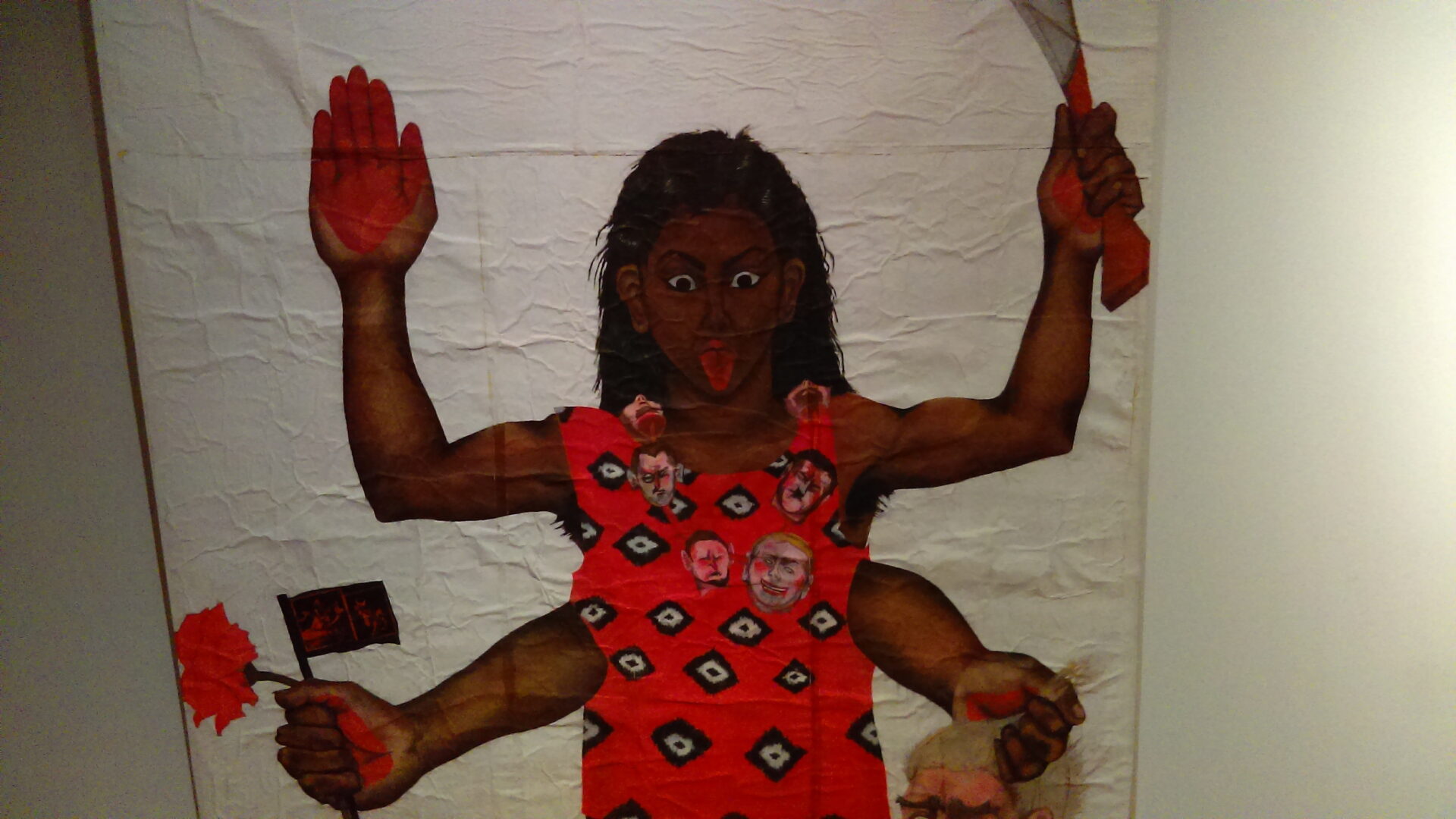
As for Speech Acts, an exhibition curated by Sonia Boyce which has raided various public collections in order to present a mixed show that aims to interweave comparatively less familiar works by a range of contemporary Black artists amongst better-known pieces by assorted British Modernists, the intention may be entirely honourable and well-intentioned but the end result is all a bit of a hodge-podge. And I’m really not sure that works by, for instance, Keith Piper, Sutapa Biswas (see below) or Lubaina Himid need to be associated with works by, for instance, Percy Wyndham Lewis, Eduardo Paolozzi or David Hockney in order to gain relevance or respect or otherwise be given some kind of a helping hand. Had a les well-respected artist curated the exhibition then I think it might well be open to criticism along the lines of it being ever so slightly patronising or even tokenistic but maybe there’s some kind of wider museological statement that’s being made here that I’ve misunderstood.
At which point I think it’s time to head off to get to the Whitworth where the two main ground floor galleries are showing series of prints by Hogarth in one room and Goya in the other. And there’s a lot to see here – in fact far too much to be taken in at one viewing, especially with Hogarth who famously delighted in filling each and every one of his satirical moralising etchings with a wealth of narrative detailed extras, symbolistic side-jokes and bravura displays of technical dexterity and virtuosity. The full suite of works making up The Rake’s Progress and Marriage a la Mode are present along with dozens of well-known individual prints – like Gin Lane and the Self Portrait with Pug – and other less familiar items – The Four Stages of Cruelty, The Four Times of the Day &c, &c. Each of these works deserves careful scrutiny and, even then, those of us without an expert’s historical knowledge of the background politics and intimate customs and conventions of 18th century British life are probably still going to miss out on half the jokes and swipes at establishment hypocrisies. Nevertheless, it’s all rollicking good stuff.

When it comes to Goya (who was working a generation or two after Hogarth), the precision detailing falls away and he chooses to use what I suppose might be called a looser more expressionistic approach to delineating his imagery. And whereas Hogarth might reasonably be accused of occasionally over-labouring the polemical points he’s trying to make, Goya seems more than happy to dash off sequences of ambiguous anecdotal imaginings that are a mix of pure documentary and semi-surreal mysticality. Examples here come from Los Caprichos, The Disasters of War and the Art of Bullfighting and they’re certainly not without interest although at close of play I think it’s still probably England-2: Spain-1.

Other displays here include Recent Acquisitions (a fairly dull selection of items with the exception of The Great Bear, Simon Patterson’s one-hit-wonder retitling of the underground map); In the Land, a small very odd assembly of works by British artists like Peter Lanyon, Terry Frost and John Piper who tried to produce abstractified landscapes without much success; Bodies of Colour an intriguing exploration of the relationship between identity politics and the Whitworth’s collection of wallpaper samples; and Alice Kettle’s very big and very pretty embroideries that were inspired by her meetings with various refugee and migrant groups.

So, lots to see at the Whitworth and Manchester, not all of it great but definitely enough of interest to justify at least an annual visit, especially with the add-on journey to Liverpool.
